

A Guide to High Quality Graphic Tees That Don't Suck
Let’s be real: a high-quality graphic tee is the one you reach for over and over. It's ridiculously soft, holds its shape wash after wash, and has a design that doesn’t crack and peel into a sad, flaky mess. It’s built from the good stuff—like premium, combed, ring-spun cotton—and put together with care. It's a wardrobe staple, not a one-hit wonder.
You’ve earned it.
Why Most Graphic Tees Betray You After One Wash
We’ve all been there. You see a hilarious tee online, fall in love with a perfectly sarcastic slogan, and hit "buy now," already imagining your new favorite mom life shirt. It was supposed to be the perfect conversation starter.
Then the package arrives. The fabric feels less like a cozy hug and more like a scratchy dish towel. And that killer design? It’s a thick, plastic-y shield plastered on your chest, making you sweat in places you didn't even know you could.
But the real betrayal comes after that first wash.
It shrinks into some weird, unintentional crop top. The side seams twist like a pretzel. The graphic cracks and looks like a dried-up desert floor. You’re left holding a sad, shrunken shadow of the glorious, funny t-shirt you thought you were getting. We get it. We’ve been burned too. That's why this guide is your official intervention.
Your T-Shirt Survival Guide
We're about to spill all the secrets to spotting a truly high-quality graphic tee—the kind that feels amazing, actually lasts, and somehow gets funnier with every wear. Think of this as your survival guide for navigating the wild world of online tees without getting duped again.
We'll break down everything from fabrics and printing methods to fit and construction, all in a way that actually makes sense. You'll learn what makes a shirt durable and why a little TLC goes a long way. For a head start, check out our simple guide on how to care for cotton shirts to keep them looking fresh.
By the end of this, you’ll be the t-shirt guru of your friend group, spotting quality from a mile away and building a collection of shirts that are actually worth your money. No more wardrobe heartbreak. Promise.
The Secret Language of T-Shirt Fabrics
Ever put on a new tee and wonder why it feels like a cloud, while the one next to it feels like cardboard? It’s not magic—it’s the fabric. Understanding t-shirt materials is like learning the secret handshake that separates cheap, one-wash-wonders from the high-quality graphic tees you’ll want to live in.
Think of it like the difference between instant coffee and a perfectly brewed espresso. Both will get you caffeinated, but one is a way better experience. Same goes for your shirts.
The Big Three Fabric Players
When you get right down to it, most of your favorite tees are made from one of three main players. Each one has its own vibe and purpose, so let's break them down.
-
100% Cotton: This is the classic, the OG, the reliable friend. It’s breathable, soft, and just feels right for everyday wear. But not all cotton is the same. You want to look for 100% combed and ring-spun cotton. That’s the VIP stuff—it's softer, smoother, and stronger because all the rough, scratchy bits have been combed out before spinning.
-
Cotton/Polyester Blends: This is where you get the best of both worlds. These blends (often called CVC or Heather) mix the natural softness of cotton with the durability and wrinkle-resistance of polyester. The result? That buttery-soft, slightly vintage feel right off the rack.
-
Tri-Blends: The undisputed champion of comfort. Made from a trio of cotton, polyester, and rayon, these shirts are ridiculously soft, lightweight, and have a beautiful drape that looks good on everyone. They feel like your favorite, perfectly broken-in shirt from the very first wear.
Getting the fabric wrong is the first step toward a terrible t-shirt. It’s the root of almost every t-shirt problem you’ve ever had.
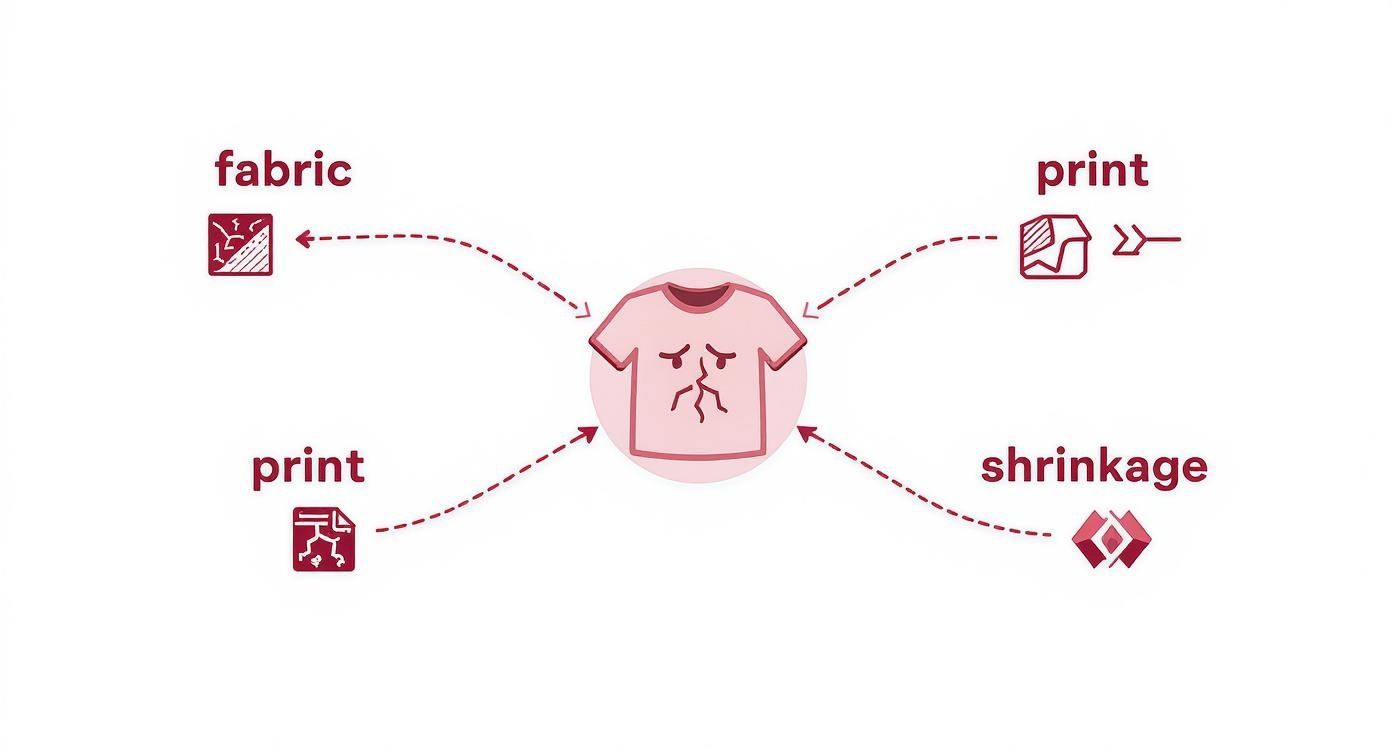
As you can see, a cheap, scratchy material doesn't just feel bad—it's the reason a shirt shrinks into a belly shirt or the print starts cracking after two washes.
So, to make things a little easier, here's a quick and dirty guide to picking the right fabric for you.
T-Shirt Fabric Face-Off: What's Best for You?
| Fabric Type | Feels Like... | The Good Stuff (Pros) | The Not-So-Good (Cons) |
|---|---|---|---|
| 100% Cotton | Your favorite old band tee. Classic, breathable, dependable. | Soft, breathable, great for sensitive skin, holds print color well. | Can shrink if you're not careful, wrinkles easily, not great for sweaty workouts. |
| Cotton/Poly Blend | That super soft, slightly stretchy shirt you "borrowed" and never gave back. | Durable, wrinkle-resistant, less likely to shrink, has that "lived-in" feel. | Not quite as breathable as 100% cotton, can sometimes pill over time. |
| Tri-Blend | Wearing a literal cloud. The softest thing you'll own. | Insanely soft, drapes beautifully, lightweight, holds its shape. | Often pricier, can be a bit thin for some people's liking. |
At the end of the day, the right fabric comes down to what you're looking for: the classic feel of cotton, the durable softness of a blend, or the luxurious comfort of a tri-blend.
Why Fabric Matters More Than You Think
Picking the right material isn't just about comfort; it affects how well the shirt holds its shape and how vibrant the graphic looks for years to come. The global market for graphic tees is blowing up and is expected to hit a massive $42.69 billion by 2032. That means way more options for you, but also a lot more potential for duds.
The bottom line is simple: a great shirt starts with great fabric. If the foundation is weak, everything else—the print, the fit, the durability—will fall apart. It's the first thing you should check before you fall in love with a funny design.
Knowing this stuff turns you into a smarter shopper. Now you can spot the good stuff just by reading a product description. For an even deeper dive, check out our guide on the best fabric for t-shirts. After all, a killer design deserves an equally amazing canvas.
Decoding the Print on Your Funny T-Shirts
That hilarious graphic on your favorite tee didn’t just magically appear. The printing method used is the real MVP, determining whether your shirt’s design lasts for years or ghosts you after just three washes. Let's pull back the curtain on the tech behind the tee.
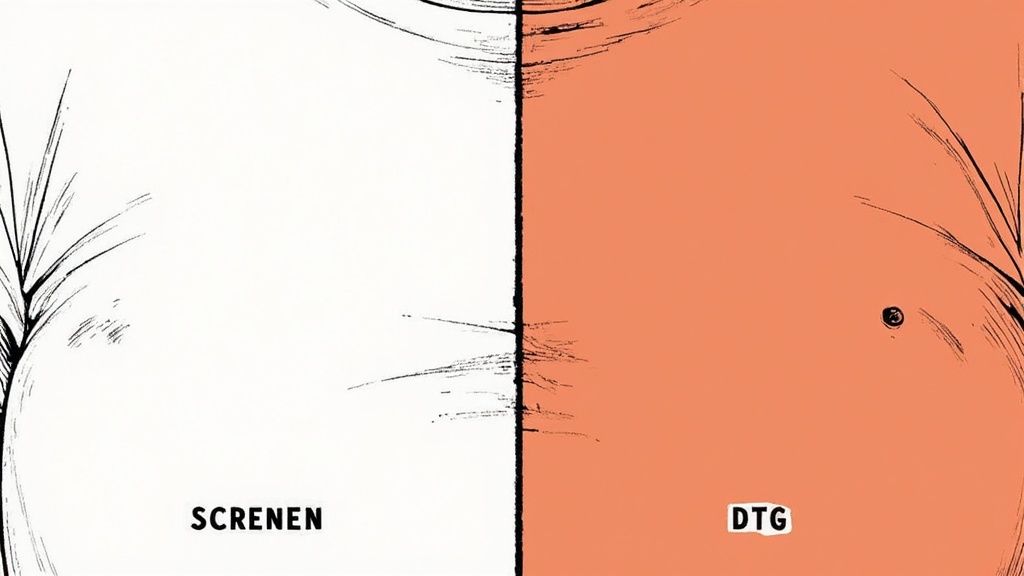
Think of it this way: you have two main options for getting a design onto a shirt. They're as different as painting a wall with a stencil versus using a high-tech photo printer. Both get the job done, but the results—and the feel—are worlds apart.
The Sturdy Stencil: Screen Printing
Screen printing is the OG, the durable workhorse of the t-shirt world. It involves pushing ink through a stenciled mesh screen directly onto the fabric, laying down one color at a time. This method creates a vibrant, long-lasting print that sits slightly on top of the fabric.
It’s fantastic for bold, simple designs (like most novelty tees with killer one-liners) because the colors are incredibly rich and tough. A well-done screen print will outlast the shirt itself, flexing with the fabric instead of cracking under pressure. The catch? It gets complicated and pricey with lots of colors, since each one needs its own separate screen.
The High-Tech Printer: Direct-to-Garment (DTG)
Direct-to-Garment, or DTG, is the newer kid on the block. It works just like your office inkjet printer, but instead of paper, it prints directly onto the t-shirt fabric. This is the secret weapon for complex, multi-colored designs with intricate details and gradients—think photorealistic images or elaborate art.
The ink soaks into the cotton fibers, making the print feel incredibly soft and breathable, almost like it's part of the fabric itself. This is how you get a high-quality graphic tee that doesn't feel like a plastic shield on your chest. You can learn more about this method in our guide on what is Direct-to-Garment printing.
The custom t-shirt printing market is booming, and for good reason. It was valued at around $9 billion globally and is expected to soar to $13.55 billion by 2029. While screen printing is still a major player, digital methods like DTG are gaining ground fast, with a growth rate of about 12.5% annually, thanks to their knack for handling detailed designs on relatable shirts.
So, what should you look for when you're shopping? A quality print—whether it's screen printed or DTG—should feel soft and flexible, not thick, heavy, or crunchy.
If you can feel a stiff, plasticky layer that could double as a bulletproof vest, run. That’s a cheap heat transfer, and it's doomed to crack, peel, and ruin your day. A great print becomes one with the shirt, ensuring your funny t-shirt stays funny, not flaky.
Construction Clues That Scream Quality
Okay, we've covered the flashy stuff—the fabrics and the prints. Now it’s time to get a little nerdy and look under the hood. The small, often-overlooked construction details are what separate a truly high-quality graphic tee from one destined to become a sad, twisted dish rag.
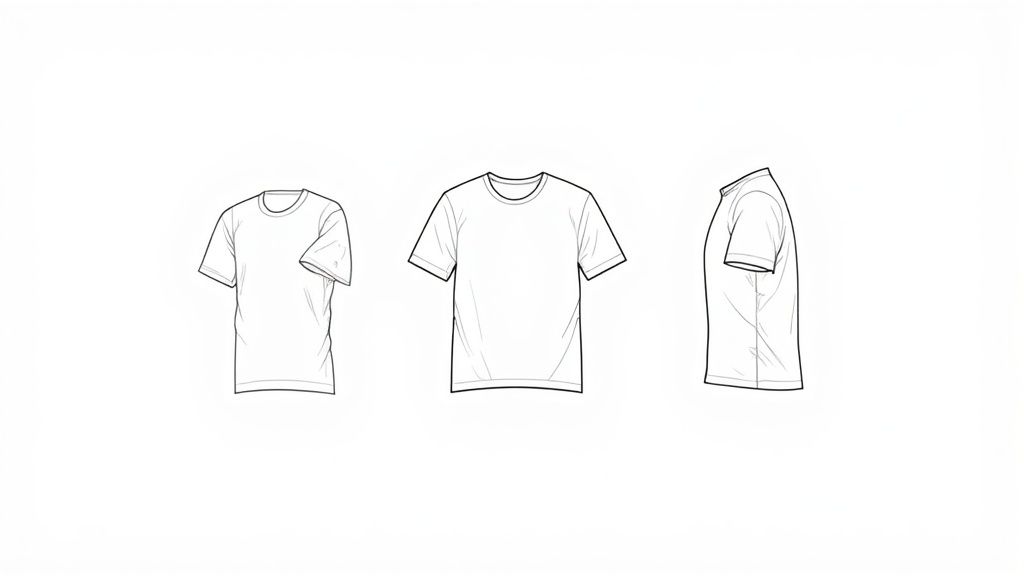
Think of it like this: a cheap, flimsy frame can make even the most beautiful painting look terrible. It's these structural elements that ensure your favorite relatable shirt holds its shape and survives the laundry gauntlet. Most people never even think to check for this stuff, which is a huge mistake.
The Fit Factor: Side-Seamed vs. Tubular
Let's talk about fit, because nothing kills a great tee faster than a weird, boxy shape that just hangs there. The culprit is almost always how the shirt was pieced together.
-
Tubular Tees: This is the cheap and easy way to make a shirt. They're literally knit as one big tube of fabric, so there are no side seams. The result? A shapeless, one-size-fits-none disaster that twists and torques after a single wash. It's a potato sack, plain and simple.
-
Side-Seamed Tees: Now we're talking. These shirts are constructed from separate front and back pieces sewn together, creating a tailored, flattering fit that actually follows the shape of a human body. It costs more to make, sure, but the difference in how it looks and feels is night and day.
A side-seamed construction is a non-negotiable sign of a high-quality graphic tee. It’s the difference between a shirt that hangs nicely and one that makes you look like a walking rectangle. Always, always check for those seams!
The Unsung Heroes of Durability
Beyond the seams, there are two other secret weapons in the fight against a floppy, falling-apart tee. Once you know what to look for, you’ll never be able to unsee them.
First up is shoulder-to-shoulder taping. This is a thin strip of fabric sewn right over the seams connecting the front and back at the shoulders. It might seem minor, but this tiny detail provides crucial structure, preventing the collar and shoulder area from stretching out and losing shape over time. It’s the backbone of your tee.
Next, take a look at the hems. You want to see double-needle stitching on the sleeves and the bottom hem. This means two perfect rows of stitching, not just one. It provides extra reinforcement, making the hems far more durable and way less likely to unravel after a few tumbles in the dryer. Think of it as your shirt's first line of defense against fraying.
These little details are the true indicators of a shirt built to last. They show the brand actually cared about the final product, not just cutting corners to save a few cents. It’s these clues that separate the keepers from the Goodwill pile.
How to Keep Your Favorite Tees Looking Awesome
You did it. You found the perfect graphic tee — the one that just gets you. Now for the hard part: making sure it doesn't meet a tragic, laundry-related end.
Let's be real, we've all accidentally sacrificed a favorite shirt to the laundry gods. But keeping your go-to funny tee looking brand new isn't rocket science. It just means ignoring everything you were ever taught about washing clothes on the "volcano" setting.
The Golden Rules of T-Shirt Care
Your shirt has two mortal enemies: heat and friction. They’re the villains behind shrinking, fading, and a cracked graphic that looks like a shattered mosaic. Fighting back is easier than you think.
Here's your no-fuss checklist for giving your tees a long, happy life:
- Turn It Inside Out: Before it even touches the water, flip that shirt inside out. This simple move protects the graphic from rubbing up against other clothes, zippers, and the inside of the machine. It’s the easiest way to keep a pristine print from getting scuffed up.
- Embrace the Cold: Hot water is a one-way ticket to a shrunken, faded disaster. Always wash your graphic tees in cold water on a gentle cycle. It gets them just as clean and is way kinder to the fabric and the ink.
- Avoid the Fiery Pit of Despair (aka The Dryer): High heat is the #1 cause of cracked graphics and sad, doll-sized shirts. The best method is to hang it up or lay it flat to air dry. If you're in a rush and absolutely must use the dryer, tumble dry on the lowest heat setting possible. Seriously, no heat is the best heat.
The bottom line is this: treat your tee with a little respect, and it’ll keep you laughing for years. A shirt that makes you smile is a true friend, and friends don't let friends get cooked in the dryer.
For an even deeper dive into the perfect laundry game plan, check out our full guide on how to wash graphic tees. Follow these simple steps, and your awesome shirt will stay awesome.
So, Why Do We Care This Much?
Okay, you’ve officially graduated from T-Shirt University. You now know exactly what separates a genuinely awesome graphic tee from those sad, one-wash-wonders that shrink, fade, and betray your trust.
Honestly? This stuff is our entire world at Laugh Riot Tees. We’re not just slinging shirts; we’re obsessing over every single detail because we believe a funny shirt should also be your absolute favorite, go-to, comfiest shirt. Period.
That’s why we hand-pick ultra-soft, durable fabrics like premium ring-spun cotton and buttery-smooth blends. A hilarious joke about mom life just hits different when you’re not distracted by scratchy, cardboard-like fabric. It’s science.
We Sweat the Small Stuff (So You Don't Have To)
Our obsession doesn’t stop at the fabric, either. We use top-notch printing methods that keep our witty designs looking crisp and crack-free, wash after wash. We fully expect your shirt to survive the laundry, the kids, and that inevitable ketchup spill.
Look, it’s a massive market out there—t-shirts pull in around $330 billion in revenue worldwide, with roughly 2 billion of them sold every single year. With that much noise, we know we have to deliver the good stuff to stand out. You can get the full scoop on the huge t-shirt market and its latest trends over at Cognitive Market Research.
We’re not just another t-shirt brand in a gigantic industry. We’re the ones who believe that a great sense of humor deserves a great-fitting, ridiculously soft tee to match.
Because we get it, we also offer free shipping on all orders. No surprises, no hidden fees. Plus, with new, hilarious designs dropping every single week, there’s always a fresh reason to treat yourself. This is where we show you we actually practice what we preach.
Your Graphic Tee Questions, Answered
Still have a few questions rattling around in your head? We get it. Think of this as your rapid-fire round of answers for finding and caring for the perfect tee.
How Can I Spot a Quality Tee When Shopping Online?
You’ve got to read the product description like you’re a detective hunting for clues. A brand that invests in good materials is going to brag about it.
Keep an eye out for phrases like “100% ring-spun cotton,” “combed cotton,” “tri-blend,” and “side-seamed.” If a description just says "cotton t-shirt," raise a suspicious eyebrow.
Also, scroll down to the customer reviews. People will always complain if a shirt feels cheap, shrinks into a belly shirt, or the design cracks after one wash. Let their pain be your guide.
Does a Higher Price Always Mean Better Quality?
Not always. Let's be real, you can definitely overpay for a fancy brand name stitched onto a mediocre shirt.
While a five-dollar tee from a sketchy website probably isn't a masterpiece, the price tag alone isn't the whole story. The sweet spot is finding a brand that invests in the important stuff—premium fabric, durable printing, and solid construction—not just a flashy logo. Use your new knowledge to judge the shirt's specs, not just its price.
Why Do My Graphic Tees Shrink Into Belly Shirts?
Ah, the dreaded shrink-ening. This wardrobe tragedy is usually caused by two things: cheap, low-grade cotton that wasn’t pre-shrunk and—the main culprit—high heat in your washer and dryer.
Heat is the mortal enemy of cotton, causing its fibers to seize up and shorten. To avoid this heartbreak, wash your tees in cold water and either hang them to dry or tumble dry on the absolute lowest heat setting.
Better yet, start by buying from brands that use high-quality, pre-shrunk cotton to begin with! It’s your best defense against accidental crop tops.
At Laugh Riot Tees, we obsess over the details so you get a ridiculously soft, hilarious shirt that actually lasts. Ready to upgrade your wardrobe?