

Finding the Best Quality Graphic Tees You'll Actually Wear
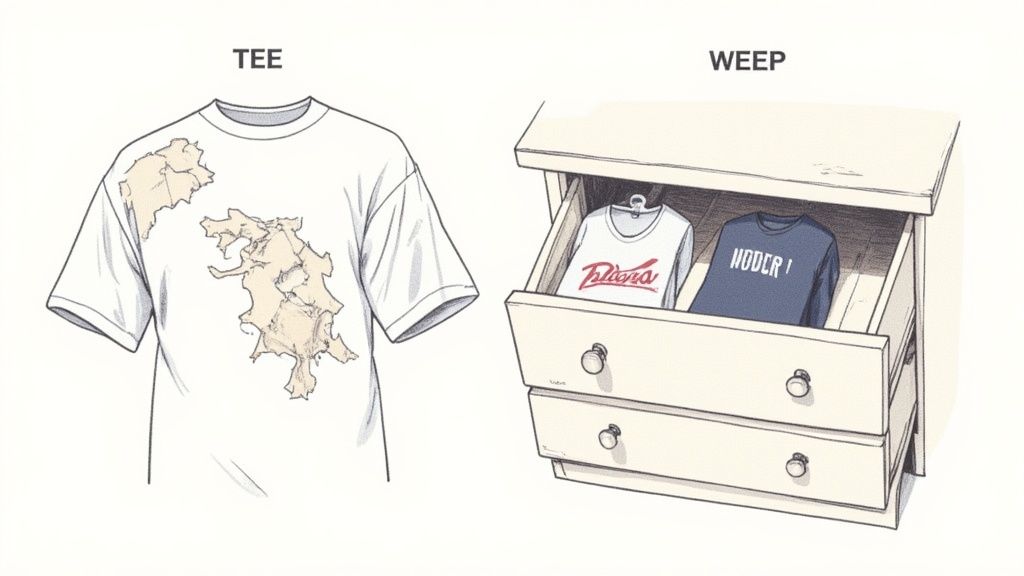
Let's be real. We've all opened that dresser drawer and stared into the abyss. It's the graveyard of graphic tee ghosts—shirts with killer designs that turned into cardboard after one wash, or that hilarious quote that cracked and peeled into an unreadable, tragic mess.
Finding the best quality graphic tees often feels like a gamble where the house always wins. You're left with a collection of cotton tragedies you wouldn't even wear to paint a fence. But it doesn't have to be this way. We're about to turn you into a tee detective.
Why Your T-Shirt Drawer Is a Land of Broken Dreams
You see it online: a perfect novelty tee that just gets you. It speaks to your soul, your caffeine addiction, or your questionable life choices. You hit "buy now," wait patiently, and tear open the package with the excitement of a kid on Christmas morning. It’s love at first sight.
Then comes laundry day.
The once-soft fabric now feels like it's plotting against your skin. The brilliant design that made you laugh out loud has faded into a depressing shadow of its former glory. That modern, flattering fit? It’s now somehow both too short and too wide, a shapeless monstrosity mocking your excellent taste.
This cycle of hope and disappointment is exhausting. You’re left with a drawer full of one-wash wonders and tees that are only suitable for sleeping in... if you're desperate. It’s a common story, but it doesn’t have to be yours.
From Sad Shopper to Tee Detective
Life’s too short for scratchy shirts and peeling prints. You deserve tees that are as durable and reliable as your love for procrastination. The good news? Spotting a high-quality graphic tee isn’t some ancient secret known only to fashion gurus. It’s a skill, and we’re about to make you a black belt in it.
This guide is your official intervention. We're staging a coup against cheap tees and turning you from a hopeful online shopper into a savvy tee detective. Forget laundry day heartbreak; by the end of this, you’ll know exactly how to identify the good stuff. We're talking shirts that stay soft, vibrant, and in regular rotation—not banished to the back of your closet.
A great graphic tee should be like a good friend: comfortable, reliable, and always there to make a statement for you. If your shirt betrays you after one wash, it was never your friend to begin with.
Ready to finally find some funny t-shirts that last? Here’s what you need to know to build a collection of relatable shirts you’ll actually want to wear for years, not just for a single, glorious outing.
Let's end the t-shirt tragedies for good.
The Secret Language of T-Shirt Fabrics
Ever stare at a t-shirt tag and feel like you’re trying to decode ancient hieroglyphics? “Combed and ring-spun cotton” sounds fancy, but what does it actually mean for your comfort? Let’s be real, the fabric is the soul of the shirt. It’s the difference between a tee that feels like a gentle hug and one that feels like a burlap sack with armholes.
Don't worry, you don't need a PhD in textiles to figure this out. We're about to become your official t-shirt translator. Understanding the material is the first and most important step in finding the best quality graphic tees that won't betray you after a few spins in the wash.
Why Cotton Is Still King
Let's start with the OG of t-shirt fabrics: cotton. It's breathable, natural, and just feels right against your skin. But here’s the secret the cheap brands don't want you to know: not all cotton is created equal. There’s a Grand Canyon-sized gap between standard, scratchy cotton and the premium stuff.
Think of it like coffee. You’ve got your gas station brew, which is technically coffee but also tastes like regret. Then you have that perfectly crafted, small-batch roast that makes you believe in a better world. That’s the difference between basic cotton and combed and ring-spun cotton.
- Standard Cotton: This is made from shorter fibers, which can poke out and make the fabric feel a bit rough or scratchy. It’s less durable and way more likely to pill up after a few washes. It’s cheap for a reason.
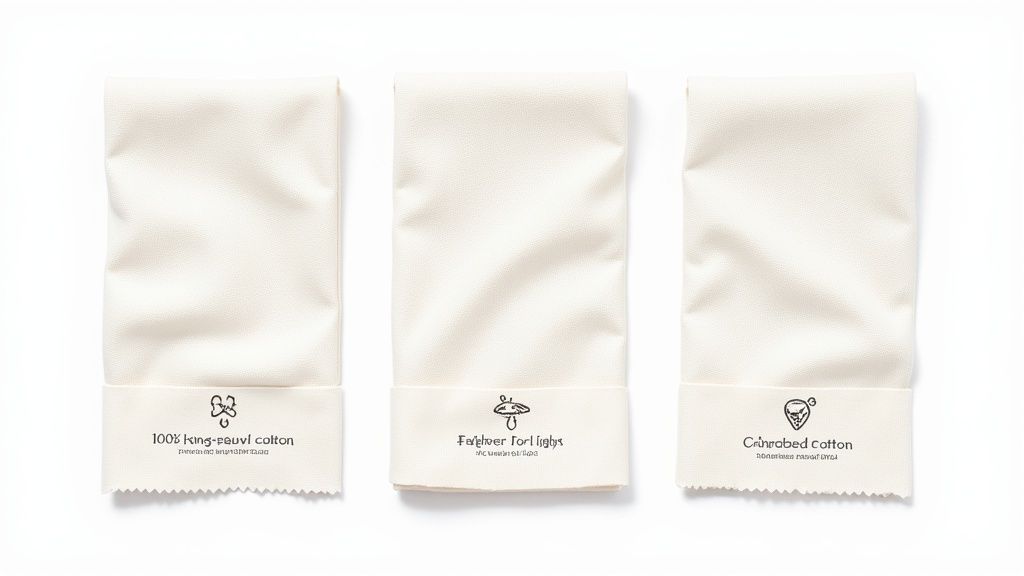
- Combed and Ring-Spun Cotton: This is the VIP section of cotton. The fibers are first combed to remove impurities and those pesky short bits, then spun into a fine, strong yarn. The result? A ridiculously soft, smooth, and durable fabric that feels amazing from day one.
When you see "100% combed and ring-spun cotton" on a tag, it’s a massive green flag. It means the brand actually cares about comfort and longevity, not just slapping a funny design on the cheapest material they could find. We dive even deeper into this in our complete guide to the best fabric for t-shirts.
The Blends: The Holy Trinity of Tee Fabrics
While 100% cotton is a classic, fabric blends are where the real magic happens. By mixing materials, you get the best of all worlds. The most common and beloved blend is the tri-blend, a glorious trifecta of cotton, polyester, and rayon.
A tri-blend tee is basically the superhero of shirts. It’s got the softness of cotton, the durability and wrinkle-resistance of polyester, and the luxurious drape of rayon. It’s the tee you’ll find yourself reaching for again and again.
Here’s a quick breakdown of the team:
- Polyester: This synthetic fiber is the workhorse. It adds durability, helps the shirt keep its shape, and fights wrinkles like a champ. A little polyester goes a long way in preventing your favorite shirt from looking like a crumpled napkin.
- Rayon: This semi-synthetic fiber is the secret to that drapey, lightweight feel. It adds a touch of silky smoothness that makes the shirt hang just right, giving it a more flattering look.
The classic 50/25/25 blend of polyester, cotton, and rayon is often considered the gold standard for buttery-soft, comfortable tees that last.
Here's a quick cheat sheet to help you sort through the options when you're shopping.
A No-Nonsense Guide to T-Shirt Fabrics
A quick comparison of common t-shirt materials to help you choose the right feel and function for your next graphic tee.
| Fabric Type | What It Feels Like | Best For | Heads Up |
|---|---|---|---|
| 100% Cotton | Soft, breathable, classic feel. The gold standard for everyday comfort. | Casual wear, sensitive skin, and anyone who loves a natural fiber. | Can shrink and wrinkle if not cared for properly. Quality varies wildly. |
| Polyester | Smooth, lightweight, and moisture-wicking. Has a slightly synthetic feel. | Athletic wear, jobs where you might sweat, resisting stains and wrinkles. | Not as breathable as cotton and can sometimes hold onto odors. |
| Cotton/Poly Blend | The best of both worlds: soft like cotton, durable and wrinkle-resistant like poly. | Your go-to everyday tee. It's soft, holds its shape, and is easy to care for. | The ratio matters. A 50/50 blend is a great middle ground. |
| Tri-Blend | The softest of them all. Drapes beautifully, lightweight, and super comfortable. | A premium, ultra-comfortable feel. The shirt you'll want to live in. | Often comes with a higher price tag, but it's worth it for the feel. |
This table should give you a solid starting point. Once you find the fabric you love, you'll never go back.
Deciphering the Tag in Seconds
So, how do you use this knowledge in the wild? It’s simple. When you're shopping, make the tag your first stop. Look for those keywords: "combed," "ring-spun," "tri-blend." If the tag just says "100% Cotton" with no other details, be skeptical. It’s likely the rougher, less durable kind.
The demand for better materials is changing the game. In a global t-shirt market projected to hit $195.6 billion by 2025, shoppers are getting smarter and seeking out premium graphic tees. These shirts stand out in a $1.84 trillion apparel landscape because they offer superior self-expression through high-quality materials, with advanced dyes resisting fading up to 30% better than standard prints.
Ultimately, investing in a better fabric means you're not just buying a shirt; you're buying comfort, durability, and a design that will actually stick around. You’ve earned a tee that feels as good as it looks.
How to Spot a High-Quality Print
So, you've found a shirt made from a fabric softer than a baby cloud. High five! But that awesome design means nothing if it feels like a sweaty, plastic shield glued to your chest. Let's be real, a breathable fabric doesn't do you any good if the graphic itself turns your torso into a personal sauna.
The print method is where a tee’s true character—and quality—is revealed. A cheap print is a one-way ticket to Cracks-ville, with a layover in Peeling-Pines. This is how you tell a premium, breathable print from a cheap, iron-on disaster waiting to happen.
The Two Main Contenders: Screen Printing vs. DTG
In the world of funny t-shirts, there are two main ways to get that hilarious design onto the fabric: Screen Printing and Direct-to-Garment (DTG). Think of them as two different artists with unique styles.
- Screen Printing: This is the old-school, tried-and-true method. It involves pushing ink through a stencil (or screen) onto the fabric, one color at a time. It's like painting with a very precise, very permanent stamp.
- Direct-to-Garment (DTG): This is the newer kid on the block. Imagine a giant, specialized inkjet printer that applies ink directly onto the fabric, much like your printer at home puts ink on paper.
Both methods can produce fantastic results, but they have their own strengths. Screen printing is known for creating incredibly bold, vibrant, and durable graphics that really sink into the fabric. DTG, on the other hand, is a master of detail, allowing for intricate, multi-colored designs with photographic quality.
The print should feel like it's part of the shirt, not just sitting on top of it. A high-quality print merges with the fabric, allowing it to breathe and move with you. A cheap print feels like a stiff, plastic sticker that's just begging to peel off.
The All-Important Feel Test
You don't need a microscope to judge print quality. Your own hands are the best tool you have. When you’re checking out a potential new tee, give it a simple "feel test."
Gently run your fingers over the graphic. How does it feel?
- Red Flag: Is it thick, stiff, and plasticky? Does it feel like it's sitting entirely on top of the fabric, creating a rigid barrier? This is a major warning sign. These types of prints are prone to cracking after just a few washes and make the shirt feel heavy and suffocating.
- Green Flag: Does the print feel soft and flexible? Can you barely feel a difference between the printed area and the rest of the shirt? This indicates the ink has been absorbed into the fabric fibers, which means it will move with the shirt, breathe better, and last a whole lot longer.
This simple test will help you avoid the kind of shirt that looks great on the hanger but feels awful to wear. After all, what's the point of a funny shirt if you dread actually putting it on?
Why Print Tech Matters More Than Ever
Getting the print right is a big deal, and advancements in printing technology have been huge for the industry. The global graphic tees market was valued at USD 28.87 billion and is projected to hit USD 42.69 billion by 2032. This growth is fueled by better printing that creates sharper, more durable graphics that actually survive the washing machine without fading into oblivion. You can read more about these graphic tee market trends on verifiedmarketresearch.com.
As technology improves, so does our ability to create awesome, long-lasting designs. For instance, DTG printing has come a long way, and modern techniques ensure the ink bonds better with the fabric for a softer feel and improved durability. If you're curious about the nitty-gritty, you can learn more about the process in our guide to Direct-to-Garment printing.
Ultimately, a quality print is a sign that the brand cares. They didn't just slap a funny quote on a blank tee; they invested in a process that ensures their humor—and your shirt—will stand the test of time.
Why Stitching and Fit Are a Big Deal
Okay, let's talk about the unsung heroes of a great t-shirt: the stitching and the fit. A shirt can have the softest fabric and the funniest design on the planet, but if it’s built poorly and fits like a potato sack, it’s going straight to the bottom of the drawer. The real difference between a favorite tee and a one-wash wonder truly lies in these crucial details.
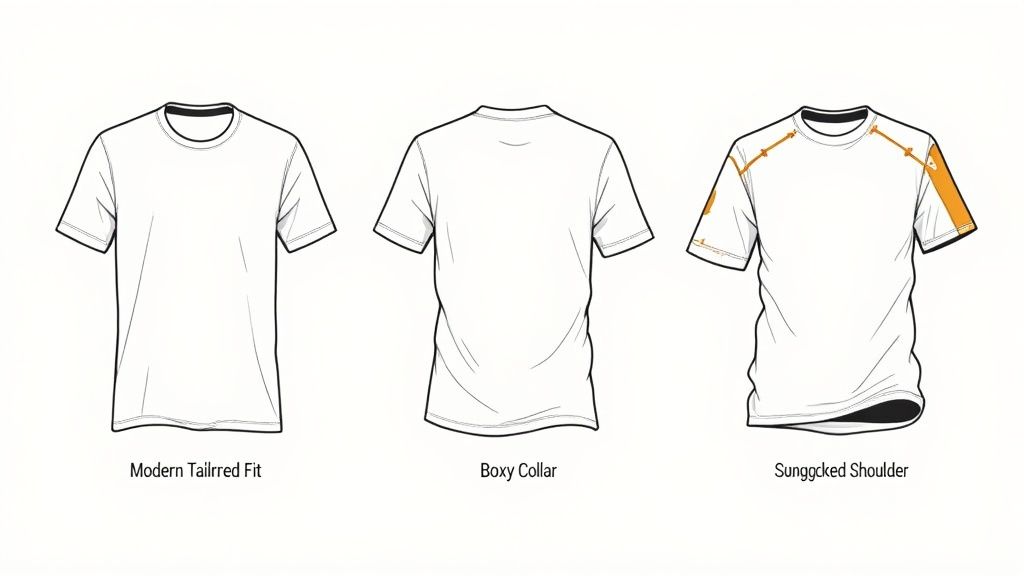
Your first clue is the fit. We’ve all worn that cheap, generic tee that’s somehow tight in the arms but billows out like a parachute at the waist. It’s just a boxy, unflattering mess. A high-quality shirt, on the other hand, has a modern, tailored fit. It’s designed to follow the shape of an actual human body, not a cardboard box, giving you a look that’s comfortable but still put-together.
The Dreaded Bacon Neck
Let's pour one out for all the great tees lost to "bacon neck." You know the look—the collar gets wavy, stretched out, and just plain sad-looking, refusing to ever lie flat again. This tragedy is a direct result of cheap construction. It’s the t-shirt equivalent of giving up on life.
The cure? Look for a ribbed knit collar with good elasticity. A well-made collar will bounce right back into shape, wash after wash. It’s a small detail that makes a massive difference in how long your shirt looks polished instead of pitiful.
A strong collar is a sign of a strong shirt. If the collar looks weak and flimsy from the get-go, it's not going to survive its first encounter with your washing machine.
Stitching: The Secret to a Long Life
Now, let's get into the real nitty-gritty of craftsmanship: the stitching. This is how you spot a shirt that was built to last versus one that was slapped together in a hurry. You don’t need to be a seamstress to spot the good stuff, either.
Here are the key things to look for:
- Double-Needle Stitching: Flip the shirt inside out and check the hem and sleeve cuffs. See those two parallel lines of stitching? That’s double-needle stitching, and it's a huge green flag. This technique provides extra reinforcement, preventing the hem from unraveling or curling up on you.
- Taped Shoulders and Neck: Look at the seam running across the shoulders and around the back of the neck. In a quality tee, you’ll often find a thin strip of fabric sewn over this seam. This is called shoulder-to-shoulder taping, and it’s a game-changer. It covers the raw edge of the seam for more comfort and, more importantly, stops the shirt from stretching out and losing its shape over time.
These details might seem minor, but they are the silent guardians of your shirt’s structural integrity. They keep everything where it’s supposed to be, making sure your tee looks as good on its 50th wear as it did on its first.
Avoiding the One-Size-Fits-None Tragedy
The perfect fit makes you feel confident and comfortable. It's the reason you reach for certain shirts over and over again. But what happens if you buy a tee that’s a little too snug, or maybe one that shrinks into a crop top after one wash? It can feel like a total loss.
But don’t despair if a beloved shirt gets a little too cozy. Sometimes, you can save it. If you've ever faced this issue, learning how to stretch cotton shirts correctly can be a lifesaver, giving your favorite tee a second chance at glory. It’s a handy trick for rescuing those mom life shirts that might have encountered an accidental hot water wash.
Ultimately, paying attention to fit and construction is how you build a collection of the best quality graphic tees that you’ll love for years. It's about choosing shirts that are designed with care, so you can focus on the important things—like showing off that impeccable sense of humor.
The Laugh Riot Tees Difference
Alright, you've made it through the t-shirt masterclass. You can now spot a cheap tee from fifty paces, grill a sales associate on fabric weight, and know exactly what "bacon neck" is (and why it’s a clothing crime).
So, let's talk about how we put all that knowledge to work here at Laugh Riot Tees. Because honestly, while it's cool to know this stuff, you probably have better things to do than inspect seams on your lunch break. That’s our job. We get obsessed with the details so you can just focus on finding a shirt that gets a laugh.
We Sweat the Small Stuff
Our rule is simple: we wouldn’t sell a shirt we wouldn’t live in ourselves.
Remember that buttery-soft, combed and ring-spun cotton we went on about? That’s where it all starts for our funny t-shirts. No scratchy, stiff cardboard shirts allowed. A good joke just doesn't land right if you're distracted by an itchy collar.
It’s the same deal with our prints. We use modern, durable printing techniques that make sure our designs feel soft and let the fabric breathe. Your favorite mom life shirt shouldn’t feel like a sheet of plastic ironed onto your chest. Our prints are designed to feel like part of the fabric, so they'll survive wash after wash without cracking, peeling, or fading into a ghost of their former selves.
At Laugh Riot Tees, our promise is to make tees that are as comfortable and reliable as they are hilarious. If it’s not soft enough to take a nap in, it doesn't make the cut.
More Than Just a Funny Shirt
We know finding the best quality graphic tees is only half of it. The whole experience has to be good. That’s why we’ve gotten rid of all the annoying stuff that makes online shopping a pain.
You know what’s the worst? Finding the perfect tee, getting to checkout, and getting slammed with a surprise shipping fee that costs almost as much as the shirt. It kills the vibe. That's why we offer free shipping on every single order, every time. No minimums, no secret codes. Just your new favorite shirt showing up at your door, minus the extra cost.
And since life keeps moving, so does our collection. We drop brand-new, relatable shirts and novelty tees every single week. Life’s too short to wear the same joke on a loop. We’re always cooking up fresh designs to keep your wardrobe as sharp as your wit.
Think of us as your personal comedy writers and quality inspectors, rolled into one. We handle all the technical stuff—the fabrics, the prints, the stitching—so you can just enjoy the laughs. You’ve earned it. Now go find a tee that speaks to your soul.